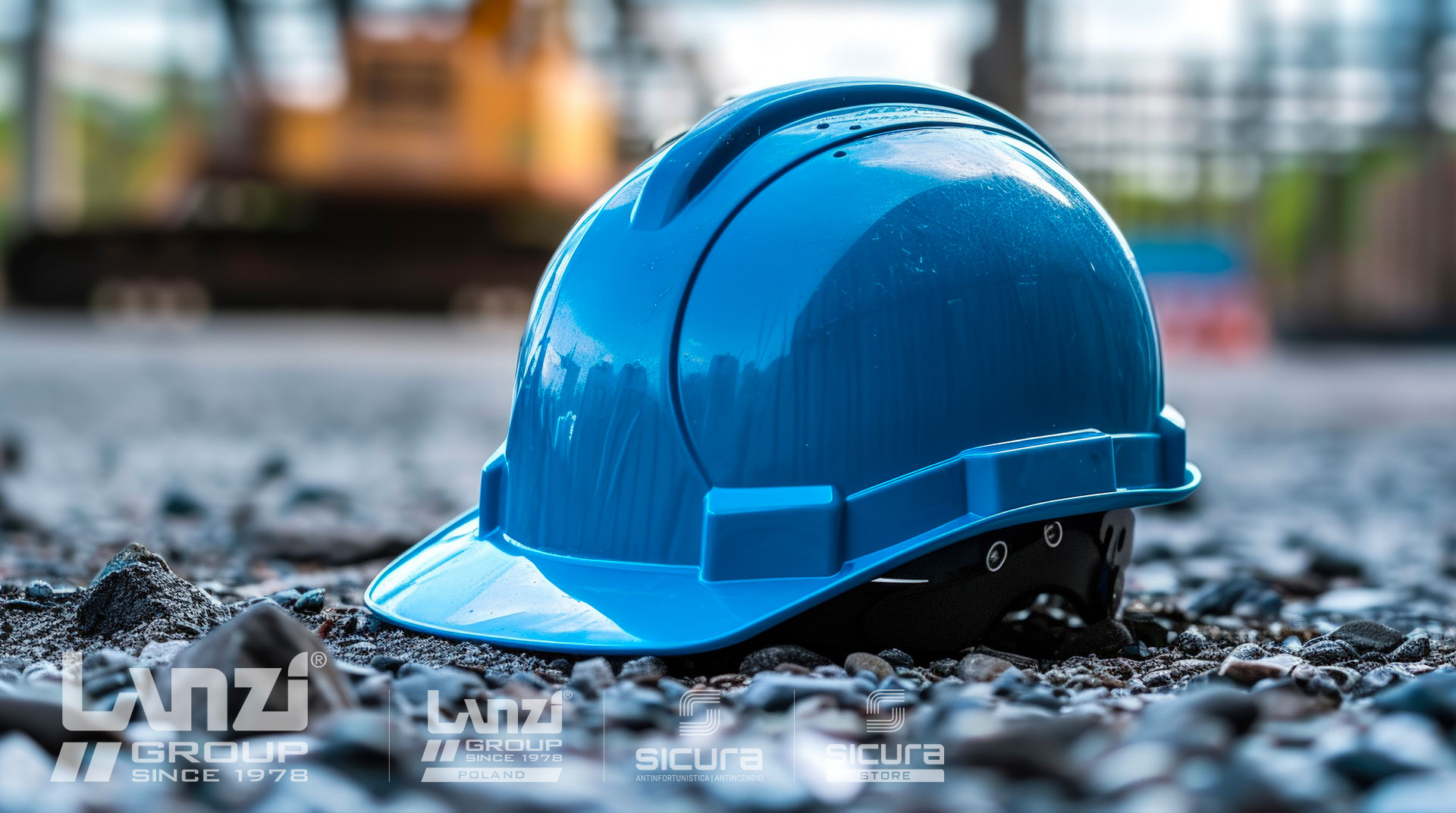
As of January 15, 2026, UNI EN 397:2026, a new standard dedicated to industrial protective helmets is in force in Italy. As reported by UNI, the Italian Standards Body, the newly released standard updates the requirements for the design, performance, testing methods and markings. These updates concern one of the most widely used items of personal protective equipment in construction sites, production plants, workshops and warehouses.
The earlier standard, EN 397, was built primarily around protecting the top of the head against impacts, typically those caused by falling objects. With the new edition, the approach broadens and takes into greater account the working conditions and situations in which impacts may also come from other directions.
UNI EN 397:2026 incorporates EN 397:2025 and the related corrigendum EN 397:2025/AC:2025, and replaces UNI EN 397:2013. As provided for in Commission Implementing Decision (EU) 2026/1279, the new European standard has been included among the references of harmonised standards drawn up in support of Regulation (EU) 2016/425 on personal protective equipment. The decision provides for a specific limitation of the presumption of conformity for certain requirements, which must be taken into account when assessing product conformity.
One of the most important changes concerns the introduction of two types of helmet, Type 1 and Type 2, characterized by different levels and methods of protection.
Type 1 helmets are more closely aligned with the provisions set out in the earlier EN 397 standard, and are primarily designed to protect against impacts to the top of the head. A chin strap may be present, but is not compulsory.
Type 2 helmets, on the other hand, are subject to more extensive protection requirements. In addition to impacts to the top of the head, they must undergo tests relating to impacts away from the crown of the helmet, specifically to the front, sides and back of the head. For this type, a chin strap retention system is compulsory and must meet more stringent requirements, designed to ensure that the helmet remains correctly positioned on the head.
Thus, the new classification enables workers to select the PPE that best matches the assessment of the risks actually encountered in the workplace. In particular, it distinguishes between situations where protection is primarily required against impacts from above and those characterised by potential impacts from multiple directions.
This aspect takes on special significance in work at height, where the use of helmets with features derived from mountaineering has become widespread in recent years. The new EN 397:2026 standard introduces Type 2 requirements for safety helmets, which address more specifically the need for protection against impacts from multiple directions. The suitability of a helmet for a given activity at height must, in any event, be verified on the basis of a risk assessment and the specifications declared by the manufacturer.
The updates to EN 397 do not concern impact resistance alone. The new standard also introduces an ergonomic assessment and pays greater attention to accessories and additional components fitted to the helmet, such as visors, hearing protectors and face shields. Compatibility between the different components becomes a major consideration: the configuration used must comply with the specifications and declarations of the manufacturer.
The standard also includes new optional performance requirements for specific applications. These include high visibility, electrostatic dissipative properties and resistance to penetration outside the crown of the shell. On the other hand, with regard to electrical risk, the new EN 397 standard eliminates the previous optional “440 V” marking, thus excluding electrical insulation from the requirements covered by the standard. For helmets intended for activities requiring specific electrical insulation properties, the reference standard is now EN 50365:2023. Compliance with EN 397 is not sufficient per se to ensure that a helmet is suitable for protection against electrical hazards.
Therefore, it becomes even more important not only to verify compliance with EN 397, but also to check the markings, declared performance, compatibility of accessories and the manufacturer’s instructions. This ensures that the helmet is selected based on the hazards actually present in the workplace.
The entry into force of UNI EN 397:2026 does not automatically require the replacement of helmets already in use. As set out in Annex II to Commission Implementing Decision (EU) 2026/1279, the reference to the earlier standard EN 397:2012+A1:2012 will remain amongst the harmonised standards until 16 December 2027, thereby ensuring a transition period towards the new edition.
It is important to note that this date applies to the withdrawal of the reference to the previous harmonised standard from the Official Journal of the European Union. It does not, however, represent an automatic deadline for the use of helmets already in service.
The helmets already assigned therefore continue to be managed in accordance with the manufacturer's instructions and must be replaced in the event of significant impacts, damage or deterioration, or at the end of their expected service life. The standard, in fact, does not define a universal service life applicable to all helmets.
For companies, health and safety managers and safety officers, the introduction of UNI EN 397:2026 primarily represents an opportunity to review the selection criteria when making new purchases. Based on the risk assessment and the activities carried out, it will be necessary to identify the most appropriate solution between Type 1 and Type 2. This decision should also take into account any specific requirements, such as electrical risks and the use of accessories.
The new standard therefore reinforces a fundamental principle: it is not enough to choose a compliant helmet. It is also necessary to identify the most appropriate level of protection in relation to the actual risks posed by the activities carried out.