

The updated version of std. 11719:2025 by the Italian Standards Body (UNI), that came into force on 20 November 2025, marked a major turning point for all organisations that use respiratory protective equipment (RPE).
The standard applies across all workplaces posing respiratory risks, such as environments containing dust, fumes, gases or vapours, confined spaces, oxygen-deficient atmospheres, or exposure to chemical and biological agents. The importance of UNI 11719:2025 is enhanced by the fact that it now serves as an authoritative technical benchmark. It reflects current best practices for the proper selection and management of respiratory PPE in accordance with the requirements of Legislative Decree 81/08. Thus, it is not simply an update, but a key development with a direct impact on the way companies organise the protection of workers exposed to contaminants or potentially hazardous atmospheres.
One of the most noticeable changes compared to the previous version concerns the overall organisation of the document. UNI 11719:2025 describes RPE in less detail, and refers instead to product technical standards on construction and performance aspects. At the same time, it serves as a veritable management model. In this regard, the standard makes a quality leap: from a technical guide focusing on the selection of PPE to a structured organisational system integrating technical, procedural and training aspects.
The various roles involved in the respiratory protection system are identified and described more clearly. Alongside the roles already provided for in a company’s prevention system, the standard sets out more specific requirements for certain functions. These include the respiratory protection programme manager, the trainer and the wearer. The wearer, in particular, is no longer viewed as a mere user, but rather as someone who must undergo mandatory theoretical training prior to using the equipment. Practical training is also required, tailored to the specific nature of the risks posed and the equipment used.
At the heart of the standard is the Respiratory Protection Programme (RPP), whose structure is described in a clearer and more comprehensive manner than in the previous version. In addition to the activities to be carried out, the document defines the rationale and the goals of the management system.
The programme starts with the accurate identification of risks, which requires an analysis of the nature of the contaminant, its concentration, environmental conditions, and the presence of potentially explosive atmospheres. Temperature and humidity levels also need to be taken into account, as well as exposure to heat or flames. The need for verbal communication and compatibility with other PPE should also be considered. Individual factors, such as wearing corrective lenses, or the workload, that may affect the effectiveness of the protective devices, are also considered.
An innovative approach to the assessment of oxygen concentration: the standard moves away from a system based on rigid thresholds (such as 17%) in favour of a more comprehensive assessment encompassing operating conditions and the instructions provided by manufacturers.
RPE selection criteria are examined in greater detail through the concepts of Nominal Protection Factor (NPF) and Assigned Protection Factor (APF). The standard underscores that RPE selection cannot be based solely on declared values, and it should also take into account actual operating conditions, including operator training and experience, and company procedures.
A substantial section is devoted to training, which is regarded as a key factor in ensuring the effectiveness of the programme. The standard specifies its content, methods and structure, setting out specific training modalities for the various roles involved. Theoretical instruction must precede practical training, and both must be completed before the equipment is put to use, in order to ensure it is utilised safely and with full awareness.
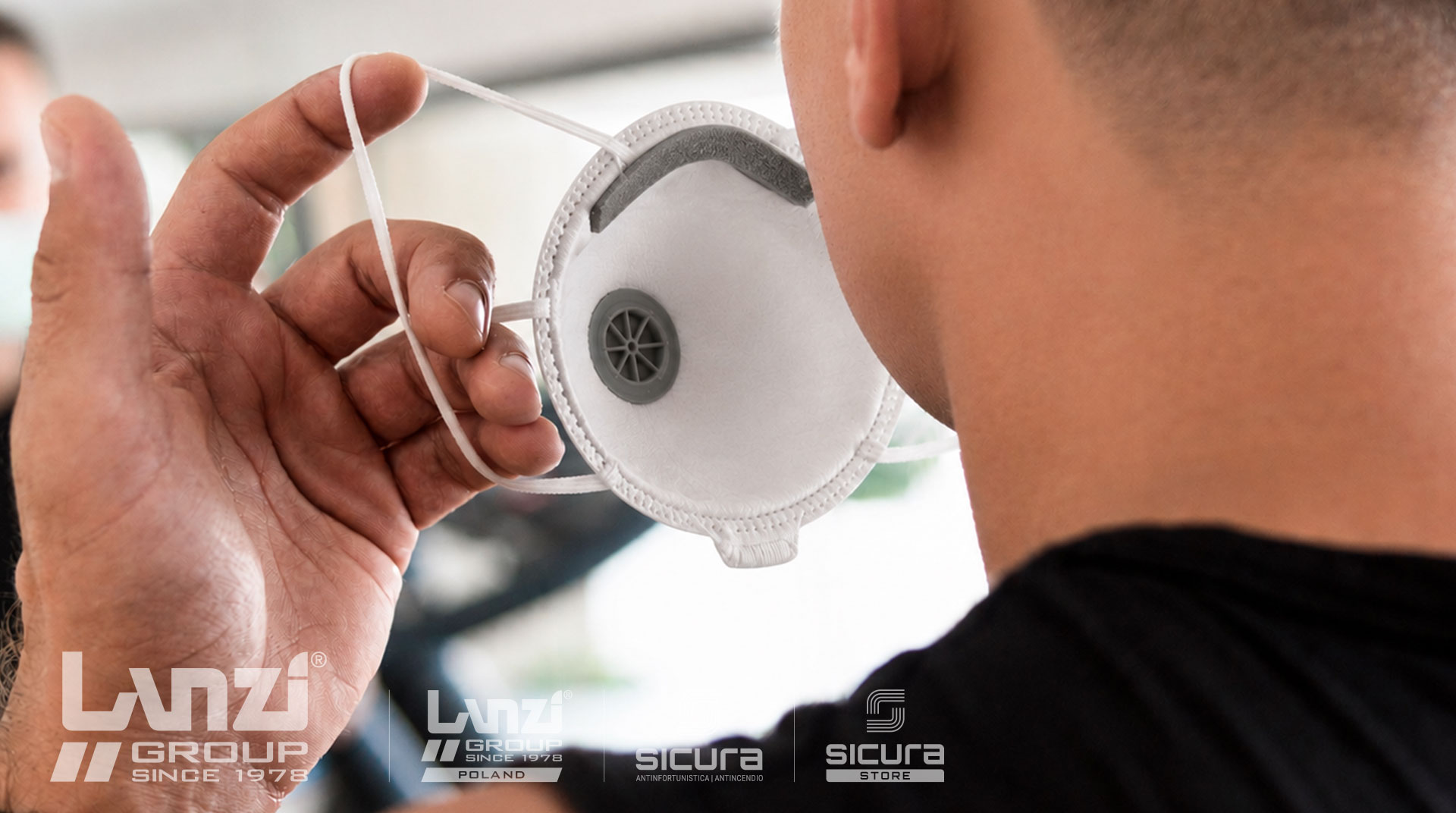
Training should preferably take place in real or simulated environments. It should include practical exercises, such as donning the equipment correctly, checking for a tight fit, using it in an emergency, and using it in combination with other PPE.
As regards refresher training, the standard indicates the need to maintain suitable levels of expertise over time. In this regard, it is generally deemed advisable to schedule refresher training at least every five years, avoiding excessively long intervals between sessions. For occasional use, more frequent training is also recommended to ensure sufficient operational readiness.
The standard also distinguishes between preventive maintenance and corrective maintenance, reiterating the importance of adhering to the manufacturer's instructions. The programme also includes activities such as checking, recording and verifying the conditions of the equipment, which are essential to ensure PPE suitability over time.
All in all, in addition to technical updates, UNI 11719:2025 includes organisational improvements. It proposes an integrated approach to respiratory protection that involves the entire company structure and clearly defines roles and responsibilities. It also stresses the need for continuous training and promotes operational procedures in keeping with current best practices.
To the companies, UNI 11719:2025 provides an opportunity to improve their procedures, training programmes and RPE management methods. It also enables them to adopt more reliable and effective measures to enhance worker protection and the overall quality of their prevention system.
For further information, write to marketing@lanzigroup.com